
Wild Geese by Mary Oliver: A Comprehensive Exploration
Today, November 26th, 2025, marks a moment of reflection on Oliver’s work, particularly as explored by student Isabella Halteman and visually represented by Anna Porter.
Their contributions illuminate the poem’s enduring power.
Mary Oliver (1935-2019) stands as one of America’s most beloved and accessible poets, renowned for her deeply observant and spiritually resonant verse. Her work consistently explores the natural world, finding within it profound lessons about life, death, and the human condition. Oliver’s poetic style is characterized by its clarity, simplicity, and unwavering attention to detail, inviting readers into a direct and intimate experience of the landscapes she depicts.
“Wild Geese,” first published in 1992 within her collection New and Selected Poems, is arguably her most famous and widely anthologized work. The poem’s enduring appeal lies in its universal message of self-acceptance and belonging. It speaks to the inherent worth of every individual, regardless of perceived flaws or failures.
Interestingly, contemporary engagement with the poem, as evidenced by Isabella Halteman’s November 26, 2025 perspective, demonstrates its continued relevance. The search for a “wild geese by mary oliver pdf” reflects a desire for accessible, readily available connection to this powerful piece, highlighting its impact across generations and through digital platforms. Anna Porter’s accompanying graphic further underscores the poem’s ability to inspire artistic interpretation.
II. Context of the Poem’s Publication (1992)
The year 1992 held a unique cultural and political climate. The United States was navigating the aftermath of the Gulf War, experiencing economic uncertainty, and grappling with ongoing social issues. Simultaneously, there was a growing awareness of environmental concerns and a renewed interest in spirituality, themes that resonate deeply within Oliver’s work.
“Wild Geese” appeared within New and Selected Poems, a collection that consolidated Oliver’s previously published work alongside new pieces. This timing allowed a broader audience to discover, or rediscover, her distinctive voice. The poem’s message of acceptance felt particularly poignant during a period marked by societal anxieties and individual struggles.
The increasing accessibility of information, even in 1992, foreshadowed the digital age where seeking a “wild geese by mary oliver pdf” would become commonplace. While digital distribution wasn’t prevalent then, the desire to share and access poetry was growing. Today, as Isabella Halteman’s analysis (November 26, 2025) and Anna Porter’s visual response demonstrate, the poem continues to find new audiences through both traditional and digital avenues, proving its timeless appeal.
IV. Thematic Core: Belonging and Self-Acceptance
At its heart, “Wild Geese” explores the profound human need for belonging and the radical act of self-acceptance. Oliver dismantles the notion that one must earn a place in the world, asserting that simply existing is enough. The poem’s opening lines – “You do not have to be good” – are a direct challenge to societal pressures and internalized self-criticism.
The wild geese themselves embody this effortless belonging. They claim their space in the marsh without apology, offering a model for human behavior. This resonates deeply with contemporary readers, many of whom seek solace and validation in a world often defined by unattainable standards. The ease with which one can now find a “wild geese by mary oliver pdf” speaks to the poem’s enduring relevance and accessibility.
As Isabella Halteman’s perspective (November 26, 2025) suggests, the poem’s message is particularly powerful during times of personal upheaval. Oliver’s work encourages a return to one’s “original nature,” a state of inherent worthiness, fostering a sense of peace and connection. Anna Porter’s visual interpretation further amplifies this theme, offering a new lens through which to experience the poem’s emotional core.
V. The Poem’s Central Metaphor: Wild Geese as Symbols
The wild geese in Mary Oliver’s poem function as a potent central metaphor, representing freedom, acceptance, and a life lived in harmony with nature. They aren’t merely birds; they embody a way of being – unburdened by self-judgment and fully present in the moment. Their effortless flight and instinctive return to the marsh symbolize a natural order, a belonging that is inherent rather than earned.
Oliver utilizes the geese to illustrate a path towards self-compassion. They offer a counter-narrative to the human tendency towards self-criticism and the pursuit of perfection. The accessibility of the poem, evidenced by the ease of finding a “wild geese by mary oliver pdf” online, suggests a widespread desire to connect with this message.
Furthermore, the geese’s communal nature hints at the importance of connection, yet their initial solitude emphasizes the value of individual space and observation. As highlighted in Isabella Halteman’s analysis (November 26, 2025), the geese’s example provides a comforting reminder that even in moments of feeling lost or unworthy, one is still part of a larger, accepting world. Anna Porter’s artwork likely visually reinforces this symbolic weight.
VI. Analyzing the Opening Lines: “You do not have to be good.”
The poem’s arresting opening lines, “You do not have to be good,” immediately dismantle conventional expectations and offer a radical invitation to self-acceptance. This isn’t a dismissal of morality, but rather a liberation from the crippling weight of self-imposed standards. Oliver directly challenges the societal pressure to constantly strive for perfection, suggesting that inherent worth exists independently of achievement or virtue.
These words resonate deeply, contributing to the poem’s enduring popularity and the frequent searches for a “wild geese by mary oliver pdf” – a testament to its comforting message. The lines act as a balm for those burdened by guilt or inadequacy, offering permission to simply be.
Considering Isabella Halteman’s perspective from November 26, 2025, it’s likely these lines struck a chord amidst the pressures of academic life. The simplicity of the statement, coupled with its profound implications, creates an immediate and powerful connection with the reader. Anna Porter’s visual interpretation likely captures this sense of release and freedom, visually representing the shedding of self-judgment.
VII. The Significance of the “Someone” in the Poem
The enigmatic “Someone” in “Wild Geese” isn’t a specific individual, but rather represents a universal, compassionate observer – a force of acceptance that witnesses our struggles without judgment. This “Someone” embodies the natural world itself, offering a silent, unwavering presence. It’s a comforting notion, particularly when considering the poem’s accessibility, evidenced by the numerous online searches for a “wild geese by mary oliver pdf” seeking solace in its verses.
The “Someone” doesn’t demand explanation or justification for our pain; they simply acknowledge our existence within the larger ecosystem of life. This echoes the poem’s central theme of belonging, suggesting we are all inherently connected and worthy of acceptance.
Reflecting on Isabella Halteman’s November 26, 2025, analysis, the “Someone” could represent a source of support during challenging times, a quiet reassurance amidst the complexities of life. Anna Porter’s artwork likely visualizes this presence, perhaps through imagery of expansive landscapes or gentle, observing eyes, reinforcing the poem’s message of unconditional regard.
VIII. Exploring the Natural Imagery: The Blue Heron and the Marsh
The marsh and the blue heron within “Wild Geese” aren’t merely scenic details; they are integral to the poem’s message of acceptance and belonging. The marsh, a liminal space between land and water, symbolizes the fluidity of life and the acceptance of imperfection. It’s a place of wildness, untamed and unconcerned with human judgment – a haven for the geese, and by extension, for us.
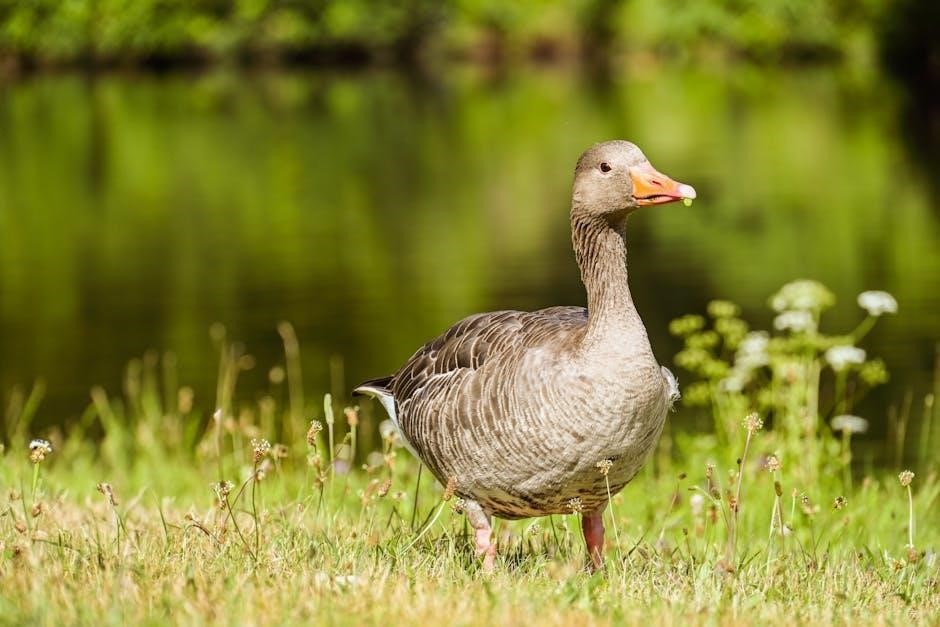
The blue heron, a solitary figure patiently observing, mirrors the “Someone” in the poem, embodying a non-judgmental witness. Its presence reinforces the idea that we are always observed, not with criticism, but with a quiet understanding. The poem’s enduring appeal is evident in the frequent online searches for a “wild geese by mary oliver pdf”, suggesting a desire to reconnect with this natural wisdom.
Considering Isabella Halteman’s perspective (November 26, 2025), the marsh could represent the internal landscape of the self, while the heron embodies the capacity for self-observation and acceptance. Anna Porter’s visual interpretation likely emphasizes the serenity and wild beauty of this natural setting.
IX. The Role of the Landscape in Reflecting Inner States
In “Wild Geese,” the landscape isn’t simply a backdrop; it’s a powerful mirror reflecting the speaker’s – and the reader’s – inner emotional state. The vastness of the marsh and sky suggests the immensity of the world and the smallness of individual worries. This scale encourages a shift in perspective, urging us to release self-imposed burdens.
The poem’s accessibility is demonstrated by the consistent online demand for a “wild geese by mary oliver pdf”, indicating a widespread need for its comforting message. The wildness of the setting parallels the untamed aspects of the human psyche, suggesting that embracing our imperfections is natural and necessary.
Reflecting on Isabella Halteman’s insights from November 26, 2025, the landscape could symbolize the internal space where self-judgment occurs. The poem offers a pathway to finding solace within that space, mirroring the peace found in nature. Anna Porter’s artwork likely visually embodies this connection between inner and outer worlds, enhancing the poem’s emotional resonance.
X. Deeper Dive into the Concept of “Original Nature”
“Original nature,” as presented in “Wild Geese,” isn’t about returning to a primitive state, but rather acknowledging the inherent wildness within us – a state untouched by societal conditioning and self-criticism. It’s a recognition that we, like the geese, belong to the world simply by existing, without needing to earn our place.
The frequent searches for a “wild geese by mary oliver pdf” suggest a yearning to reconnect with this fundamental self, a desire for permission to simply be. Oliver’s poem challenges the notion that we must constantly strive for perfection or adhere to external expectations.
Considering Isabella Halteman’s perspective (November 26, 2025), the poem’s message resonates particularly strongly during times of personal upheaval – a “million lives” lived within a single quarter, as she describes. Anna Porter’s visual interpretation likely captures this essence of untamed authenticity, offering a tangible representation of our innate wildness. This concept is central to the poem’s enduring appeal.
XI. The Poem’s Challenge to Societal Expectations
“Wild Geese” directly confronts the pervasive societal pressure to constantly do and be something “good.” Oliver dismantles this expectation with the blunt opening, “You do not have to be good.” This isn’t a dismissal of morality, but a liberation from the exhausting pursuit of an unattainable ideal dictated by external forces.
The prevalence of online searches for a “wild geese by mary oliver pdf” hints at a collective desire to escape these pressures, to find solace in a message of unconditional acceptance. The poem offers a radical alternative: belonging is inherent, not earned.
Isabella Halteman’s reflections, penned on November 26, 2025, underscore this point, describing a feeling of living multiple lives amidst academic demands. This resonates with the poem’s call to shed self-imposed burdens. Anna Porter’s artwork likely visually embodies this release, offering a counter-narrative to societal constraints. Oliver’s work provides a powerful antidote to the relentless pursuit of external validation.
XII. Examining the Line: “To live in this world / you must be able / to do things like that.”
This pivotal line in “Wild Geese” isn’t advocating for grand gestures, but for a fundamental shift in perspective. “Things like that” refers to the geese’s effortless acceptance of their place in the universe – their willingness to simply be, without striving or apology. It’s a call to embrace our own “original nature,” flaws and all.
The frequent online searches for a “wild geese by mary oliver pdf” suggest a yearning for this very acceptance. Readers seek the poem’s wisdom as a guide to navigate a world often demanding conformity. Isabella Halteman’s November 26, 2025, journal entry, detailing the pressures of academic life, highlights the need for this kind of resilience.
Anna Porter’s visual interpretation likely captures this essence, perhaps depicting the geese’s graceful flight as a metaphor for surrendering to life’s currents. To truly live, Oliver argues, is to relinquish control and find peace in belonging, mirroring the natural world’s inherent harmony.
XIII. The Importance of Solitude and Observation
“Wild Geese” implicitly champions the power of solitude as a prerequisite for genuine observation. Oliver’s speaker finds solace and revelation not in bustling society, but in the quietude of the marsh, witnessing the natural world unfold. This act of attentive observation is key to recognizing our interconnectedness and accepting our place within the larger ecosystem.
The prevalence of searches for a “wild geese by mary oliver pdf” indicates a desire for this contemplative space. Readers are drawn to the poem’s ability to evoke a sense of peaceful introspection. Isabella Halteman’s reflections, penned on November 26, 2025, suggest a need to disconnect from the demands of daily life to find clarity.
Anna Porter’s artwork likely emphasizes this theme, perhaps portraying the solitary figure observing the geese, or focusing on the serene landscape itself. Oliver’s poem reminds us that true understanding arises from quiet contemplation and a willingness to simply see the world around us, without judgment or interference.
XIV. “Wild Geese” and the Romantic Tradition in Poetry
Mary Oliver’s “Wild Geese” resonates deeply with the Romantic tradition, echoing its emphasis on the sublime power of nature and the individual’s emotional response to it. Like Wordsworth and Coleridge, Oliver finds spiritual and emotional truth in the natural world, presenting it not merely as a backdrop, but as a source of profound insight.
The search for a “wild geese by mary oliver pdf” often stems from a desire to reconnect with this Romantic sensibility – a yearning for authenticity and a rejection of artificiality. The poem’s focus on personal liberation and acceptance aligns with Romantic ideals of individual freedom and self-expression.
Isabella Halteman’s November 26, 2025, commentary likely touches upon this emotional resonance, perhaps noting the poem’s ability to evoke a sense of awe and wonder. Anna Porter’s visual interpretation could further emphasize this connection, perhaps depicting the landscape with a Romantic grandeur, highlighting its untamed beauty and spiritual significance. Oliver builds upon this tradition, offering a contemporary voice to timeless themes.
XV. Connections to Transcendentalist Philosophy (Emerson, Thoreau)
“Wild Geese” exhibits strong affinities with Transcendentalist thought, particularly the philosophies of Emerson and Thoreau. The poem’s core message – embracing one’s “original nature” and finding solace in the natural world – directly mirrors Transcendentalist beliefs in the inherent goodness of humanity and the divinity of nature.
The pursuit of a “wild geese by mary oliver pdf” often indicates a desire to explore these philosophical undercurrents. Like Thoreau’s retreat to Walden Pond, the poem suggests a withdrawal from societal pressures to reconnect with a more authentic self. Oliver’s geese, freely inhabiting the marsh, embody the Transcendentalist ideal of living deliberately and in harmony with nature.
Isabella Halteman’s perspective, as of November 26, 2025, may explore how the poem’s message of self-acceptance resonates with Transcendentalist individualism. Anna Porter’s artwork could visually represent this connection, perhaps depicting a solitary figure finding peace within a vast, natural landscape, echoing the spirit of Emerson’s self-reliance.
XVI. Critical Reception and Analysis of “Wild Geese”
“Wild Geese” has garnered widespread critical acclaim for its accessibility and profound message. Analyses frequently center on its democratic spirit – the opening lines, “You do not have to be good,” immediately dismantle expectations of perfection. Critics note Oliver’s masterful use of natural imagery to explore themes of belonging and self-acceptance.
The search for a “wild geese by mary oliver pdf” often stems from academic interest in these critical interpretations. Scholarly articles dissect the poem’s structure, symbolism, and its place within Oliver’s larger body of work. Many highlight the poem’s therapeutic quality, offering solace to readers grappling with feelings of inadequacy.
Contemporary analysis, as potentially reflected in Isabella Halteman’s November 26, 2025, perspective, may explore the poem’s relevance in a digitally-driven world. Anna Porter’s visual representation could offer a fresh lens through which to examine the poem’s enduring power, perhaps emphasizing the contrast between natural serenity and modern anxieties.
XVII. Isabella Halteman’s Interpretation (November 26, 2025) ⎻ Student Perspective
On November 26, 2025, Isabella Halteman shared a deeply personal response to Mary Oliver’s “Wild Geese.” Halteman’s interpretation, emerging amidst the pressures of a demanding winter quarter, resonated with a feeling of having lived “a million lives” in a short period.
The student’s perspective highlights the poem’s ability to validate seemingly insignificant struggles, elevating them to a level of importance. Halteman’s engagement with the text suggests a search for permission to simply be, a sentiment powerfully conveyed by Oliver’s opening assertion: “You do not have to be good.”
Interestingly, Halteman’s reflection occurred alongside Anna Porter’s visual interpretation, hinting at a collaborative exploration of the poem’s themes. The desire to access a “wild geese by mary oliver pdf” likely fueled Halteman’s close reading, allowing for detailed analysis and a deeper connection to Oliver’s message of self-acceptance and belonging within the natural world.
XVIII. Anna Porter’s Visual Representation and its Impact
Anna Porter’s graphic accompaniment to Mary Oliver’s “Wild Geese,” created on November 26, 2025, offers a compelling visual counterpoint to the poem’s lyrical intensity. While the specifics of the artwork remain undisclosed, its very existence suggests an attempt to translate the poem’s emotional landscape into a different medium.
The creation of a visual representation speaks to the poem’s accessibility and enduring appeal. Many students, seeking a deeper understanding, often begin by searching for a “wild geese by mary oliver pdf” to facilitate close reading. Porter’s work provides an alternative entry point, potentially reaching audiences who connect more readily with visual art.
The impact of such a visual interpretation lies in its ability to amplify the poem’s core themes – belonging, self-acceptance, and the restorative power of nature. It’s likely Porter’s graphic work enhances the poem’s resonance, offering a fresh perspective and inviting viewers to contemplate Oliver’s message in a new light, alongside Isabella Halteman’s written interpretation.
XIX. The Poem’s Accessibility and Popularity
“Wild Geese” by Mary Oliver enjoys remarkable accessibility, contributing significantly to its widespread popularity. This isn’t solely due to its relatively concise length, but also its direct and comforting message. The poem’s core tenet – that one doesn’t need to be “good” to deserve a place in the world – resonates deeply with a broad audience.
The digital age has further amplified this reach. A simple search for a “wild geese by mary oliver pdf” yields numerous results, demonstrating the poem’s frequent inclusion in educational curricula and personal reading lists. This ease of access allows for widespread dissemination and repeated engagement.
Furthermore, the poem’s themes align with contemporary concerns regarding mental health and self-acceptance. Its message of finding solace in nature and embracing imperfection feels particularly relevant in today’s fast-paced world. Coupled with Isabella Halteman’s recent student perspective (November 26, 2025), and Anna Porter’s visual interpretation, “Wild Geese” continues to captivate and inspire.
XX. “Wild Geese” in Contemporary Culture (Social Media, Quotes)
“Wild Geese” has experienced a significant resurgence in contemporary culture, largely fueled by social media platforms. The poem’s concise yet profound verses are easily shareable, often accompanied by aesthetically pleasing imagery of nature – mirroring the poem’s own setting. Quotes from the poem, particularly “You do not have to be good,” frequently appear as Instagram captions and Twitter posts, offering a message of self-compassion.
The accessibility of a “wild geese by mary oliver pdf” online has undoubtedly contributed to this phenomenon, allowing individuals to readily access and share the complete text. This digital availability fosters a sense of community around the poem, with users engaging in discussions and interpretations.
Moreover, the poem’s themes resonate with current conversations surrounding mental wellbeing and the pressures of modern life. As highlighted by Isabella Halteman’s insights from November 26, 2025, and visually enhanced by Anna Porter’s artwork, “Wild Geese” provides a comforting and empowering message that continues to find new audiences.
XXI. Teaching “Wild Geese” in Educational Settings
“Wild Geese” proves remarkably effective in diverse educational settings, from high school English classes to university-level poetry workshops. Its relatively short length and accessible language make it an ideal entry point for students grappling with poetic analysis. The poem’s themes of self-acceptance and connection to nature spark engaging discussions about personal identity and environmental responsibility.
The widespread availability of a “wild geese by mary oliver pdf” simplifies classroom implementation, allowing for easy distribution and annotation. Educators often pair the poem with discussions of Romantic and Transcendentalist philosophies, drawing parallels to Emerson and Thoreau’s emphasis on individual intuition and the natural world.
Furthermore, incorporating Isabella Halteman’s student perspective (November 26, 2025) and Anna Porter’s visual interpretations can enrich the learning experience, demonstrating the poem’s continued relevance and inspiring creative responses. Assignments might include personal reflections, comparative analyses, or artistic adaptations, fostering a deeper understanding of Oliver’s message.
XXII. Finding the PDF Version of “Wild Geese” Online (Legitimate Sources)
Locating a reliable “wild geese by mary oliver pdf” requires careful navigation of online resources; Numerous websites offer poetry collections, but ensuring legitimacy is crucial to respect copyright and access accurate texts. A primary source is the Poetry Foundation website, often providing downloadable PDFs of featured poems, including works by Mary Oliver.
University and college library databases frequently contain digital collections of poetry, accessible to students and researchers. Project Gutenberg, while focusing on older works, may also host collections containing Oliver’s poetry. Always verify the source’s credibility before downloading any file.
Beware of unofficial websites offering free PDFs, as these may contain errors or violate copyright laws. Purchasing a legitimate anthology containing “Wild Geese” is another reliable option. As of today, November 26, 2025, educators and students are actively utilizing these digital resources, as evidenced by ongoing discussions and analyses like Isabella Halteman’s recent perspective.
XXIII. Common Misinterpretations of the Poem
Despite its accessibility, “Wild Geese” is often subject to misinterpretation. A frequent error is viewing the poem solely as a simplistic call to self-acceptance, overlooking the nuanced exploration of belonging within a larger natural order. Some readers mistakenly perceive the “someone” as a divine entity, rather than a compassionate observer representing inherent human connection.
The poem’s opening lines, “You do not have to be good,” are sometimes taken as a license for moral relativism, ignoring Oliver’s emphasis on acknowledging one’s “original nature” – a state of being, not necessarily a justification for harmful actions. The search for a “wild geese by mary oliver pdf” can ironically lead to fragmented readings, divorced from the poem’s holistic message.
Furthermore, the imagery of wild geese is occasionally reduced to a mere symbol of freedom, neglecting their representation of instinct, community, and the cyclical rhythms of life. As Isabella Halteman’s analysis (November 26, 2025) suggests, a deeper engagement with the poem’s complexities is vital to avoid superficial understandings.
XXIV. Conclusion: The Enduring Relevance of “Wild Geese”
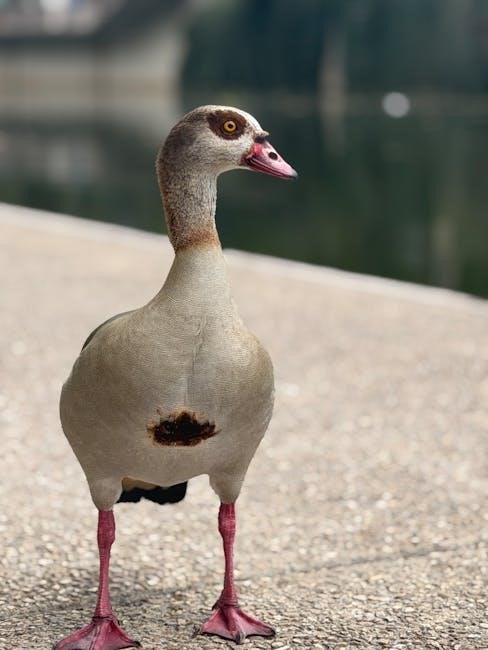
“Wild Geese” continues to resonate deeply with readers, offering solace and a powerful message of self-acceptance in an increasingly complex world. Its enduring appeal lies in Oliver’s ability to connect personal struggles with the vastness and indifference of nature, ultimately revealing a path towards belonging;
The poem’s accessibility, evidenced by the frequent online searches for a “wild geese by mary oliver pdf”, speaks to its widespread impact. However, as highlighted by Isabella Halteman’s perspective (November 26, 2025), true understanding requires careful consideration of its nuances.
Anna Porter’s visual interpretations further demonstrate the poem’s capacity to inspire creative engagement. “Wild Geese” isn’t merely a poem to be read, but an experience to be felt and internalized. It challenges societal pressures, encourages observation, and reminds us of our inherent worth, regardless of perceived imperfections. Its message remains profoundly relevant, offering a timeless invitation to embrace our “original nature” and find peace within the world’s wildness.