
Raymond Chang Chemistry PDF: A Comprehensive Guide
Raymond Chang’s Chemistry, available in PDF format, is a widely-used textbook offering comprehensive coverage of general chemistry principles.
It’s a valuable resource for students and educators alike, known for its clarity and detailed problem-solving approach.
What is Raymond Chang Chemistry?

Raymond Chang’s Chemistry is a highly regarded textbook utilized in introductory chemistry courses across universities and colleges. It’s celebrated for presenting complex chemical concepts in a clear, concise, and accessible manner, making it easier for students to grasp fundamental principles. The book emphasizes a problem-solving approach, equipping students with the skills to tackle various chemical challenges.
Co-authored with Kenneth Goldsby, the textbook provides a robust foundation in general chemistry, covering topics from atomic structure and bonding to thermodynamics and kinetics. It’s not merely a presentation of facts, but a guide to understanding the ‘why’ behind chemical phenomena. The PDF version offers convenient access to this comprehensive material, allowing students to study efficiently on various devices. It’s a cornerstone resource for anyone embarking on their chemistry journey, fostering a deeper understanding of the molecular world.
The Authors: Raymond Chang & Kenneth Goldsby
Raymond Chang, the primary author, is a distinguished figure in chemistry education, renowned for his dedication to student understanding. His extensive experience teaching and observing students has deeply influenced the textbook’s pedagogical approach, prioritizing clarity and respect for diverse learning styles. Chang’s work focuses on making complex topics approachable, fostering a positive learning experience.
Kenneth Goldsby, co-author, brings significant expertise in inorganic chemistry, enriching the textbook’s content and exercises. As a professor at the University of Florida, Goldsby’s contributions stem from his intensive work with students, both in classroom settings and laboratory environments. His collaboration with Chang ensures a balanced and thorough presentation of chemical principles. Together, they’ve created a textbook that reflects both theoretical depth and practical application, making it a trusted resource for generations of chemistry students.
Editions Available & Key ISBNs
Raymond Chang’s Chemistry has undergone several editions, each refined to enhance clarity and incorporate the latest advancements in the field. The most recent is the 13th Edition, identified by ISBN 978-1260162325, offering updated content and problem sets. Earlier editions, while still valuable, may lack the most current information.
The 12th Edition and preceding versions remain accessible, though finding corresponding supplementary materials might be more challenging. A crucial companion is the Student Solutions Manual, available with ISBNs 9780077386542 and 9780072549928, providing solutions to even-numbered problems. When seeking a PDF version, verifying the edition and ISBN is vital to ensure you have the correct and most relevant material for your course or study needs. Be cautious of outdated or incomplete versions circulating online.
13th Edition (978-1260162325)
The 13th Edition of Raymond Chang’s Chemistry, ISBN 978-1260162325, represents the most current iteration of this foundational textbook; It builds upon previous editions with revised explanations, updated examples, and a strengthened focus on real-world applications. This edition incorporates the latest discoveries and pedagogical research to optimize student learning.
A key feature is its continued emphasis on problem-solving, guiding students through complex concepts with clear, step-by-step solutions. Accessing a PDF version of this edition ensures you have the most accurate and up-to-date content. Remember to pair it with the corresponding Student Solutions Manual (ISBN 9780077386542) for comprehensive practice. Purchasing from legitimate sources guarantees a complete and reliable learning experience, avoiding potential issues with unauthorized downloads.
12th Edition & Earlier Versions
While the 13th Edition is the most recent, older editions of Raymond Chang’s Chemistry, such as the 12th and earlier versions, remain valuable resources. These editions still cover fundamental chemistry principles, though they may lack the latest updates and refinements found in the newest release. Finding a PDF of these older editions can be a cost-effective option for students.
However, be aware that problem sets and examples might differ. Corresponding Student Solutions Manuals (like ISBN 9780072549928 for some editions) are crucial for practice, focusing on solutions to even-numbered problems; Ensure compatibility between the textbook and solutions manual versions. Always prioritize legitimate sources when seeking PDF copies to avoid incomplete or inaccurate materials, and to respect copyright regulations.
Understanding the Textbook’s Scope
Raymond Chang’s Chemistry textbook primarily focuses on General Chemistry, providing a foundational understanding of chemical principles. It systematically covers topics from atomic structure and bonding to thermodynamics, kinetics, and equilibrium. The scope extends to include qualitative and quantitative aspects of chemistry, preparing students for further studies in specialized fields.
This textbook is designed for both Students and Educators. Students benefit from clear explanations and numerous examples, while instructors appreciate the comprehensive coverage and accompanying resources. The PDF version maintains the textbook’s original structure, allowing for easy navigation and study. It’s a robust resource for anyone seeking a thorough grounding in the core concepts of chemistry.
General Chemistry Focus
Raymond Chang’s Chemistry maintains a strong General Chemistry focus, systematically building from fundamental concepts. It begins with the basics – matter, measurement, and atomic theory – and progresses through chemical bonding, stoichiometry, gases, liquids, and solids. Thermodynamics and chemical kinetics are explored in detail, alongside equilibrium principles and acid-base chemistry.
The textbook doesn’t delve deeply into specialized areas like organic or biochemistry, instead providing a solid foundation applicable across various scientific disciplines. The PDF format allows students to easily access and navigate these core concepts. Emphasis is placed on problem-solving skills, equipping students to apply theoretical knowledge to practical scenarios. This focused approach makes it ideal for introductory chemistry courses.
Target Audience: Students & Educators
Raymond Chang’s Chemistry, in PDF form, primarily targets undergraduate students enrolled in introductory chemistry courses – typically the first year of college or university. It’s designed for those with limited prior chemistry experience, offering a clear and accessible pathway to understanding core principles. The textbook’s structure and explanations cater to diverse learning styles.
However, the resource is equally valuable for educators. Instructors utilize it for course material, assignment creation, and as a reference for clarifying complex topics. The accompanying Student Solutions Manual aids in teaching and assessment. The PDF format facilitates easy distribution of materials and integration into online learning platforms, benefiting both students and instructors seeking a comprehensive chemistry resource.

Supplementary Materials & Resources
Raymond Chang’s Chemistry is enhanced by valuable resources like Student Solutions Manuals, offering detailed solutions to even-numbered problems, and Test Banks for instructors.
Student Solutions Manual
The Student Solutions Manual is an indispensable companion to Raymond Chang’s Chemistry textbook, designed to significantly aid students in mastering the course material. Specifically, it provides detailed, step-by-step solutions to the even-numbered problems presented within the textbook itself. This allows students to check their work, understand where they may have gone wrong, and reinforce their problem-solving skills.
Currently, two ISBNs identify available versions: 9780077386542 and 9780072549928. It’s important to note that solutions for problems categorized under “Interpreting, Modeling & Estimating” are intentionally not included in the manual, encouraging independent thought. The solutions are presented in a style mirroring the worked examples found within the textbook, fostering a consistent learning experience and promoting a deeper understanding of the underlying chemical concepts. This manual is a crucial tool for self-study and exam preparation.
Availability & ISBN (9780077386542, 9780072549928)
The Student Solutions Manual for Chemistry by Raymond Chang and Kenneth Goldsby is readily available through various booksellers, most notably Amazon.com. Identifying the correct edition is crucial for compatibility with your textbook. Two primary ISBNs denote different versions of the manual: 9780077386542 and 9780072549928.
These ISBNs ensure you’re purchasing the correct accompanying resource. Availability can fluctuate depending on demand and retailer stock levels. Purchasing directly from the publisher’s website or reputable online bookstores is recommended to guarantee authenticity and avoid potentially outdated or incomplete copies. Checking the edition year is also vital, as solutions align specifically with the corresponding textbook edition. Careful attention to these details will maximize the manual’s effectiveness as a study aid.
Content Coverage: Even-Numbered Problems
The Student Solutions Manual meticulously addresses the even-numbered problems presented within Raymond Chang’s Chemistry textbook. This focused approach allows students to independently verify their understanding of core concepts and problem-solving techniques. It’s important to note, however, that solutions for problems categorized under “Interpreting, Modeling & Estimating” are deliberately not included within the manual.
This omission encourages students to actively engage with these critical thinking exercises without relying on pre-determined answers. The manual’s solutions mirror the detailed, step-by-step examples found within the textbook itself, fostering a consistent learning experience. This stylistic alignment aids comprehension and reinforces effective problem-solving strategies, ultimately enhancing the student’s grasp of chemical principles.
Test Banks for Instructors
Raymond Chang’s Chemistry is often accompanied by comprehensive Test Banks specifically designed for instructors. These resources are invaluable tools for assessing student comprehension and tailoring course evaluations. Typically, these test banks contain a wide array of questions, including multiple-choice, true/false, and problem-solving exercises, mirroring the textbook’s content and difficulty level.

Access to these test banks is generally restricted to verified educators, ensuring academic integrity and preventing unauthorized distribution. They allow instructors to create customized quizzes and exams, focusing on specific chapters or learning objectives. Information regarding access to these test banks is usually provided through the publisher or educational platforms, supporting effective teaching and evaluation within chemistry courses.
Online Resources & Digital Access

Alongside the Raymond Chang Chemistry PDF, numerous online resources enhance the learning experience. Publishers often provide digital access to supplementary materials, including interactive quizzes, practice problems, and video tutorials. These resources are designed to reinforce key concepts and provide students with additional support outside of the classroom.
Digital platforms may also offer access to the textbook itself in an interactive format, allowing for features like highlighting, note-taking, and search functionality. Furthermore, instructors may utilize Learning Management Systems (LMS) to distribute assignments, track student progress, and facilitate online discussions. These digital tools complement the PDF version, creating a dynamic and engaging learning environment for students studying chemistry.

Finding and Accessing the PDF
Raymond Chang Chemistry PDF versions can be legally purchased from reputable online bookstores like Amazon or directly from the publisher’s website.
Beware of unauthorized downloads!
Legitimate Sources for PDF Purchase
Obtaining a Raymond Chang Chemistry PDF through legitimate channels ensures you receive a high-quality, authorized version of the textbook. Amazon.com is a reliable source, offering both new and used digital copies, often with Kindle compatibility. You can directly purchase the PDF from the publisher’s website, McGraw Hill, which frequently provides various digital formats and package options, potentially including access to supplementary materials.
VitalSource is another platform specializing in digital textbooks, including various editions of Chang’s Chemistry. These sources guarantee the integrity of the content and support the authors and publishers. Purchasing legally also often grants access to valuable online resources, such as interactive quizzes and instructor-provided materials, enhancing the learning experience. Avoid websites offering “free” PDFs, as these are often illegal copies and may contain malware or incomplete content.
Potential Risks of Unauthorized Downloads
Downloading a Raymond Chang Chemistry PDF from unofficial sources carries significant risks. These illegally distributed copies frequently contain malware, including viruses and spyware, which can compromise your device and personal information. The quality of these PDFs is often poor, with missing pages, distorted images, or unreadable text, hindering your studies.
Furthermore, accessing copyrighted material without authorization is illegal and unethical, potentially leading to legal consequences. Unofficial PDFs lack the support and supplementary resources available with legitimate purchases, such as access to solutions manuals or online learning platforms. Supporting unauthorized downloads undermines the authors and publishers, discouraging the creation of valuable educational materials. Prioritize your digital safety and academic integrity by opting for authorized sources when acquiring your Chemistry textbook.
PDF Format & Compatibility
The Raymond Chang Chemistry PDF is generally designed for broad compatibility across various devices and operating systems. PDF (Portable Document Format) ensures consistent formatting regardless of the platform – Windows, macOS, iOS, or Android. To view and interact with the PDF, you’ll need a PDF reader, such as Adobe Acrobat Reader, which is available as a free download.
Most modern web browsers also have built-in PDF viewing capabilities. However, for advanced features like highlighting, note-taking, and form-filling, a dedicated PDF reader is recommended. Ensure your software is up-to-date for optimal performance and security. The file size of the PDF may vary depending on the edition and included supplementary materials, but it should be accessible on most standard devices.
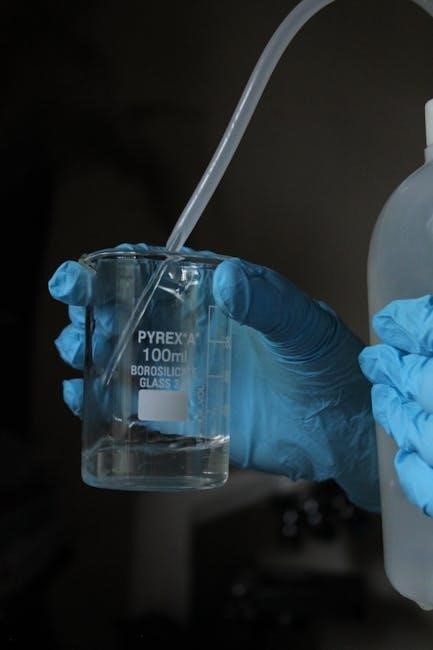
Key Features & Strengths of the Textbook
Raymond Chang’s Chemistry excels with clear explanations, a robust problem-solving approach, and a strong emphasis on real-world applications, aiding comprehension.
Clear Explanations of Complex Concepts
Raymond Chang’s Chemistry distinguishes itself through its ability to demystify challenging chemical concepts. The textbook doesn’t simply present formulas and theories; it meticulously breaks down intricate ideas into manageable, understandable components. This is achieved through a combination of detailed explanations, illustrative diagrams, and a consistent emphasis on fundamental principles.
The author’s writing style prioritizes clarity, avoiding unnecessary jargon and ensuring that students can follow the logical progression of thought. Complex topics like thermodynamics, quantum mechanics, and chemical kinetics are presented in a way that builds upon prior knowledge, fostering a deeper understanding rather than rote memorization. The textbook’s success lies in its commitment to making chemistry accessible to a broad range of learners, regardless of their initial background or aptitude.
Problem-Solving Approach & Examples
Raymond Chang’s Chemistry doesn’t just focus on theoretical knowledge; it heavily emphasizes practical application through a robust problem-solving approach. Throughout the textbook, numerous worked examples demonstrate how to apply chemical principles to real-world scenarios. These examples aren’t merely solutions; they meticulously illustrate each step of the problem-solving process, guiding students through the logic and reasoning involved.
The textbook also includes a vast array of end-of-chapter problems, ranging in difficulty from straightforward exercises to more challenging analytical tasks. A Student Solutions Manual is available (ISBN 9780077386542, 9780072549928) providing solutions to even-numbered problems, mirroring the textbook’s detailed approach to aid student learning and self-assessment. This focus on practice solidifies understanding and builds confidence in tackling complex chemical challenges.
Focus on Real-World Applications
Raymond Chang’s Chemistry distinguishes itself by consistently connecting fundamental chemical concepts to tangible, real-world applications. The textbook moves beyond abstract theory, illustrating how chemistry impacts everyday life, from environmental issues and medical advancements to industrial processes and consumer products. This approach enhances student engagement and demonstrates the relevance of chemistry beyond the classroom.
Examples throughout the text showcase the practical implications of chemical principles, fostering a deeper understanding of the subject matter. The authors, Raymond Chang and Kenneth Goldsby, integrate these applications seamlessly, making complex ideas more accessible. This focus isn’t just about memorization; it’s about understanding why chemistry matters and how it shapes the world around us, enriching the learning experience for students and educators alike.

Using the Textbook Effectively
To maximize learning, actively engage with Raymond Chang’s Chemistry, utilizing the Student Solutions Manual for practice and supplementing with available online resources.
Strategies for Studying with Raymond Chang Chemistry
Successfully navigating Raymond Chang’s Chemistry requires a strategic approach. Begin by thoroughly reading each chapter, highlighting key concepts and definitions. Actively work through the example problems presented within the text, paying close attention to the step-by-step solutions. Don’t just memorize; strive to understand the underlying principles.
Regularly attempt the end-of-chapter problems, starting with the easier ones to build confidence. Utilize the Student Solutions Manual to check your work, but focus on understanding how the solutions are derived, not simply copying them. Form study groups to discuss challenging topics and reinforce your understanding.
Consider creating flashcards for important formulas and definitions. Relate the concepts to real-world applications to enhance retention. Finally, consistently review previous material to maintain a strong grasp of the fundamentals. Consistent effort and active engagement are key to mastering the material presented in this comprehensive textbook.
Utilizing the Solutions Manual for Practice
The Student Solutions Manual is an invaluable companion to Raymond Chang’s Chemistry, specifically designed to enhance your learning experience. It provides detailed solutions to even-numbered problems found within the textbook, offering a crucial resource for self-assessment and practice. However, it’s vital to use it effectively.

Resist the temptation to immediately consult the manual when encountering a challenge. First, diligently attempt the problem yourself, applying the concepts and techniques learned from the textbook. Only then, should you refer to the manual to check your work and identify areas where you may have struggled.
Carefully analyze the provided solutions, focusing on the reasoning and methodology employed. Don’t simply copy the answers; strive to understand the underlying principles. Note that solutions for ‘Interpreting, Modeling & Estimating’ problems are not included. This manual is a tool for learning, not a shortcut to avoid critical thinking.
Supplementing with Online Resources
Beyond the textbook and Solutions Manual, numerous online resources can significantly enhance your understanding of Raymond Chang’s Chemistry. While the official companion website may offer additional practice problems and interactive tools, be cautious of unauthorized downloads claiming to provide complete PDF versions of the textbook or Test Banks.

These sources often pose security risks and may contain inaccurate or outdated information. Instead, explore reputable educational platforms like Khan Academy or Coursera for supplementary explanations of core concepts. Utilize online chemistry forums and communities to engage with peers and seek clarification on challenging topics.
Remember to critically evaluate the credibility of any online resource before relying on its content. Always prioritize official materials and verified sources to ensure accuracy and avoid misinformation. Combining textbook study with these resources will foster a deeper, more comprehensive grasp of chemistry.