
The Tiny Seed by Eric Carle: A Comprehensive Guide
Discover access to “The Tiny Seed” PDF, a cherished tale by Eric Carle, readily available through legal downloads and online resources for educators and families.
Eric Carle (1929-2023) was a celebrated American author, designer, and illustrator of children’s books, instantly recognizable for his vibrant, collage-based illustrations. Born in Syracuse, New York, his early life experiences, including a childhood spent in Germany during World War II, profoundly influenced his artistic sensibilities.
Carle’s distinctive style, developed over decades, utilizes hand-painted tissue paper collages, creating rich textures and captivating visuals. He didn’t begin his career in children’s literature directly; he worked as a graphic designer before transitioning to illustrating and writing for young audiences. His breakthrough came with The Very Hungry Caterpillar (1969), a book that remains a cornerstone of early childhood education.
Throughout his prolific career, Carle authored and illustrated over seventy books, translated into more than sixty languages. His works consistently explore themes of nature, growth, and the wonders of the natural world. The Tiny Seed, published in 1987, exemplifies his dedication to portraying the life cycle in an accessible and engaging manner, often available as a convenient PDF for educational purposes.
The Significance of “The Tiny Seed”
“The Tiny Seed” holds a unique place within Eric Carle’s body of work, offering a compelling narrative about resilience and the cyclical nature of life. Unlike many children’s stories focused on immediate gratification, this book emphasizes perseverance, showcasing a seed’s arduous journey to blossom into a flower.
The story’s power lies in its simple yet profound message: even the smallest and seemingly insignificant beings can overcome immense challenges. It visually demonstrates the stages of plant life – from seed dispersal to germination, growth, and eventual flowering – making it an invaluable educational tool. The availability of a PDF version enhances its accessibility for classrooms and homeschooling environments.
Beyond its scientific value, “The Tiny Seed” fosters an appreciation for nature and encourages children to observe the world around them. It’s a testament to Carle’s ability to transform complex biological processes into a captivating story, inspiring young readers with a message of hope and determination.
Understanding the Story
Explore the captivating journey of a tiny seed, beautifully illustrated in Eric Carle’s classic, often found as a convenient PDF download for easy reading.
Plot Summary: The Seed’s Journey
“The Tiny Seed” chronicles the remarkable adventure of a single seed, embarking on a perilous journey to find fertile ground and blossom into a vibrant flower. The story begins with a cluster of seeds carried by the wind, facing numerous challenges along the way; Many seeds are lost to harsh conditions – some land on scorching heat, others on icy cold landscapes, and some become a tasty snack for birds.
However, our tiny seed perseveres, demonstrating incredible resilience. It travels far and wide, enduring drought and navigating dangerous environments. The PDF version of the book vividly portrays this struggle through Eric Carle’s iconic collage illustrations. Eventually, the seed lands in a safe, nurturing spot, taking root and growing into a beautiful wildflower.
The narrative beautifully illustrates the plant life cycle, from seed dispersal to germination and growth. The story emphasizes the importance of perseverance and the power of nature, making it a compelling read, especially when accessed as a readily available PDF.
Main Characters: The Tiny Seed and Its Environment
The Tiny Seed itself is the central protagonist – a small, seemingly insignificant entity embodying resilience and the potential for life. It’s a character defined not by personality, but by its unwavering journey and eventual triumph. The PDF version of Eric Carle’s book allows close examination of its visual representation, highlighting its vulnerability and determination.
However, the environment plays an equally crucial role, acting as both antagonist and facilitator. The harsh landscapes – scorching heat, freezing cold, and dry deserts – represent the obstacles the seed must overcome. Conversely, the nurturing soil, warm sunshine, and gentle rain symbolize the conditions necessary for growth.
Other characters, like birds, represent the dangers faced during dispersal. The book, easily accessible as a PDF, showcases Carle’s ability to personify these elements, creating a dynamic interplay between the seed and its surroundings, emphasizing the interconnectedness of nature.
Themes Explored: Perseverance and the Life Cycle
“The Tiny Seed”, readily available as a PDF, beautifully illustrates the theme of perseverance. The seed’s relentless journey, surviving harsh conditions that defeat others, embodies unwavering determination. This message resonates deeply with young readers, encouraging them to overcome their own challenges.
Central to the narrative is the exploration of the plant life cycle. From dispersal by the wind to germination, growth, and eventual flowering, the book presents a simplified yet accurate depiction of this natural process. The PDF format allows for repeated viewing of Eric Carle’s illustrations, reinforcing each stage.
Furthermore, the story subtly touches upon themes of resilience and the importance of patience. The seed doesn’t instantly become a flower; it requires time, nurturing, and the ability to withstand adversity. Accessing the PDF provides an excellent opportunity for educators to discuss these concepts.

Educational Value & Curriculum Integration
“The Tiny Seed” PDF enhances science and literacy lessons, offering vibrant visuals and a compelling narrative for exploring plant life cycles and vocabulary.
Science Concepts: Plant Life Cycle Explained
Eric Carle’s “The Tiny Seed” PDF beautifully illustrates the complex journey of a plant’s life cycle in a way that’s accessible to young learners. The story meticulously details each stage, beginning with seed dispersal – showcasing how seeds travel via wind, a key concept in botany.
Children witness the seed’s resilience as it endures harsh conditions like heat, cold, and drought, highlighting the importance of adaptation. The narrative then progresses through germination, where the seed sprouts roots and a stem, and finally, to growth and flowering.
The PDF version allows for easy pausing and discussion at each stage, reinforcing understanding. Educators can use it to explain pollination and seed production, completing the cycle. The book isn’t just a story; it’s a visual aid that simplifies complex scientific processes, fostering a love for nature and scientific inquiry in children. It provides a foundation for further exploration of plant biology.
Early Literacy Skills: Vocabulary and Story Structure
“The Tiny Seed” PDF serves as an excellent tool for developing early literacy skills. Carle employs repetitive phrases and a clear, sequential narrative, reinforcing story structure for young readers. The book’s simple yet descriptive language introduces children to new vocabulary related to plants, weather, and nature – words like ‘disperse,’ ‘germinate,’ and ‘drought.’
The predictable pattern of the seed’s journey aids in comprehension and encourages children to anticipate what happens next. This builds confidence and fosters a love of reading. The PDF format allows teachers and parents to easily highlight key vocabulary and discuss the story’s progression.
Furthermore, the book’s visual storytelling supports comprehension, especially for emergent readers. Discussing the illustrations alongside the text enhances vocabulary retention and strengthens the connection between words and their meanings, making learning engaging and effective.
Classroom Activities: Seed Germination Experiments
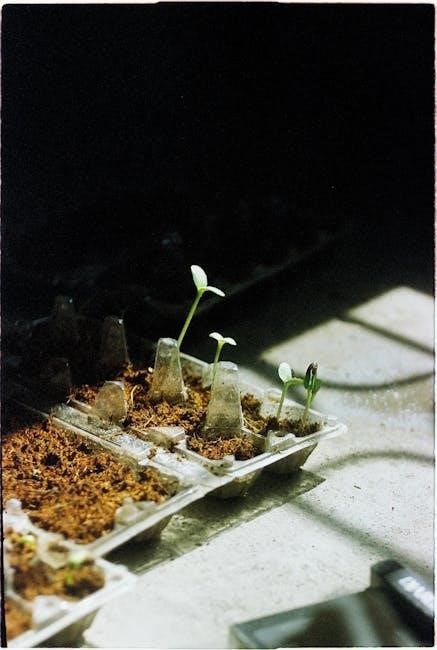
Using “The Tiny Seed” PDF as inspiration, educators can implement engaging seed germination experiments. A simple activity involves planting bean seeds in clear plastic cups with soil, allowing students to observe the stages of growth firsthand – mirroring the seed’s journey in the book.
Students can document their observations through drawings and written descriptions, reinforcing literacy skills alongside scientific understanding. Comparing seeds exposed to different conditions (light vs. dark, water vs. no water) demonstrates the importance of environmental factors.
The PDF’s illustrations can serve as visual aids during discussions about the life cycle. Extend the learning by creating a classroom “seed hotel” to observe seed dispersal methods. These hands-on experiences connect the story’s themes to real-world science, fostering a deeper appreciation for nature and the power of perseverance.
Integrating “The Tiny Seed” into Nature Studies
Leveraging the “The Tiny Seed” PDF, educators can seamlessly integrate the story into broader nature studies. Begin with outdoor explorations, collecting different types of seeds and comparing their sizes, shapes, and potential dispersal methods – mirroring the tiny seed’s travels.
Discuss the roles of wind, water, and animals in seed dispersal, connecting the book’s narrative to ecological concepts. Create a classroom garden where students can plant seeds and observe the entire life cycle firsthand, from germination to flowering.
The PDF’s vibrant illustrations can inspire nature journaling, encouraging students to sketch and describe local plants and seeds. Extend the learning with field trips to botanical gardens or nature preserves, fostering a deeper connection to the natural world and reinforcing the story’s message of resilience.

Finding and Accessing the PDF
Locate “The Tiny Seed” PDF through legal downloads, online resources, and digital platforms, ensuring access to Eric Carle’s beloved story for all.
Where to Download “The Tiny Seed” PDF Legally
Securing a legal PDF copy of Eric Carle’s “The Tiny Seed” is crucial to support the author and publisher while enjoying this classic tale. Several avenues offer legitimate access. Firstly, explore reputable online bookstores like Amazon, Barnes & Noble, and Apple Books, which frequently sell digital versions of Carle’s works, including “The Tiny Seed” as an eBook.
Secondly, consider digital library services such as OverDrive or Libby, often accessible through your local public library. These platforms allow borrowing eBooks for free with a library card.
Furthermore, Picture Book Studio, the publisher, may offer direct downloads or links to authorized retailers. Be cautious of websites offering free PDFs, as these may infringe on copyright and potentially contain malware. Always prioritize official sources to ensure a safe and ethical reading experience. Checking for watermarks or publisher logos can also help verify authenticity.
Remember, supporting authors like Eric Carle allows them to continue creating inspiring and educational books for generations to come.
Free Online Resources for the PDF Version
Finding a completely free and legal PDF of “The Tiny Seed” can be challenging, as copyright restrictions generally apply. However, several online resources offer access through legitimate means. Internet Archive provides digitized versions of books, sometimes including older editions of Eric Carle’s work, available for borrowing or limited access.
Additionally, some educational websites or school district resources may host PDF copies for classroom use, though access is typically restricted to students and educators. YouTube often features read-aloud videos of “The Tiny Seed,” offering a free alternative to reading the book directly.
Be extremely cautious when encountering websites offering free downloads, as many may contain viruses or infringe on copyright. Always verify the source’s legitimacy before downloading any files. Utilizing library digital lending services, as mentioned previously, remains a safe and legal avenue for accessing the eBook without cost.
Remember to respect copyright laws and support authors by purchasing their work when possible.
Paid Digital Platforms Offering the eBook
Numerous reputable digital platforms offer “The Tiny Seed” eBook for purchase, ensuring a legal and high-quality reading experience. Amazon Kindle Store is a primary source, providing the eBook compatible with Kindle devices and the Kindle app across various devices. Apple Books also features the title, accessible on iPhones, iPads, and Macs.
Barnes & Noble’s Nook platform is another option, offering the eBook for Nook e-readers and the Nook app. Kobo is a further alternative, providing a wide selection of eBooks, including Eric Carle’s beloved story. These platforms often feature enhanced eBook features, such as adjustable font sizes and built-in dictionaries.
Purchasing through these platforms supports the author and publisher, ensuring continued creation of quality children’s literature. Prices typically range from $5 to $10, depending on the platform and any ongoing promotions. Consider exploring these options for a convenient and legally sound way to enjoy “The Tiny Seed.”
Checking PDF File Size and Compatibility
When downloading “The Tiny Seed” PDF, verifying the file size is crucial. A typical PDF of this children’s book ranges around 21;6 MB, as noted in available online files. Significantly smaller sizes may indicate a low-resolution or incomplete copy. Larger files could suggest embedded multimedia, but should still be within a reasonable range.
Compatibility is equally important. PDFs are generally universally readable, but ensure your device or software has a PDF reader installed – Adobe Acrobat Reader is a free and widely used option. Check if the PDF is optimized for viewing on tablets or smartphones if that’s your intended use.
Test the file by opening it on your preferred device. Verify that the images are clear, the text is legible, and all pages load correctly. If issues arise, try updating your PDF reader or downloading the file again from a different source.

Analyzing Eric Carle’s Artistic Style

Eric Carle’s signature collage technique and vibrant color palette beautifully illustrate the seed’s journey in “The Tiny Seed,” captivating young readers with visual storytelling.
Collage Technique: A Signature Element
Eric Carle’s distinctive artistic style is immediately recognizable, and central to this is his masterful use of collage. He didn’t paint his illustrations; instead, he created them by layering brightly colored tissue papers, carefully cut and pasted onto a white background. This technique gives his work a unique texture and depth, making the images incredibly engaging for young children.
In “The Tiny Seed,” this collage approach is particularly effective in depicting the natural world. The varied textures of the paper mimic the roughness of bark, the softness of petals, and the delicate structure of a seed. The layering also creates a sense of movement, illustrating the seed’s journey as it travels on the wind and encounters different environments.
Carle would paint the tissue paper himself, allowing him complete control over the color and tone. This meticulous process, combined with his artistic vision, results in illustrations that are both visually stunning and emotionally resonant, enhancing the story’s impact and making “The Tiny Seed” a beloved classic.
Color Palette and Visual Storytelling
Eric Carle’s use of color in “The Tiny Seed” isn’t arbitrary; it’s a crucial element of visual storytelling. He employs a vibrant, often bold, color palette to capture the attention of young readers and convey the story’s emotional tone. The bright hues represent the energy and vitality of nature, while shifts in color subtly indicate changes in the seed’s environment and its journey.
For example, warmer tones might depict the sun-drenched fields, while cooler shades could represent the harshness of winter. The contrasting colors also help to highlight key elements of the story, drawing the eye to the tiny seed as it navigates its challenging path.
Carle’s deliberate color choices aren’t just aesthetically pleasing; they actively contribute to the narrative, enhancing comprehension and creating a more immersive reading experience for children. The PDF version faithfully reproduces these colors, preserving the artistic integrity of the original work.

The Impact of Illustrations on Young Readers
Eric Carle’s distinctive illustrations in “The Tiny Seed” profoundly impact young readers, fostering engagement and comprehension. His hand-painted collage technique creates a tactile quality, even within the digital format of a PDF, making the story visually appealing and memorable. The simplicity of the shapes and forms allows children to easily identify and connect with the seed and its surroundings.
These illustrations aren’t merely decorative; they actively support the narrative, clarifying complex concepts like the plant life cycle. The visual representation of the seed’s journey – enduring harsh conditions and ultimately blossoming – is particularly powerful for young minds.
Accessing the story through a “The Tiny Seed” PDF ensures that children can experience Carle’s artistry in a readily available format, promoting a love of reading and an appreciation for the natural world.

Beyond the Book: Related Works by Eric Carle
Explore Carle’s universe, including “The Very Hungry Caterpillar,” and other nature-themed books, easily accessible as PDFs, expanding learning beyond “The Tiny Seed.”
“The Very Hungry Caterpillar” and its Connection
Both “The Very Hungry Caterpillar” and “The Tiny Seed” showcase Eric Carle’s masterful storytelling and distinctive collage illustrations, captivating young readers with vibrant visuals and simple narratives. While one details a caterpillar’s metamorphosis, the other follows a seed’s incredible journey.
A key connection lies in their shared exploration of life cycles – transformation and growth are central themes in both books. Like the tiny seed persevering through harsh conditions, the caterpillar relentlessly eats to prepare for its own significant change.
Finding PDF versions of “The Very Hungry Caterpillar” is similarly straightforward, with legal downloads available through various online platforms and digital bookstores. Exploring both books together provides a richer understanding of nature’s processes and reinforces early literacy skills. Carle’s consistent style makes transitioning between the stories seamless for young children, fostering a love for reading and learning about the natural world.
Furthermore, both titles are frequently used in educational settings, with accompanying resources like worksheets and lesson plans readily available online.
Exploring Other Books About Nature and Growth
Beyond “The Tiny Seed,” Eric Carle’s bibliography is rich with titles celebrating the natural world and the wonders of growth. “Draw Me a Star” explores a firefly’s life cycle, while “A House for Hermit Crab” beautifully illustrates adaptation and community within a marine ecosystem.
These books, like “The Tiny Seed” – often available as a PDF download – share Carle’s signature collage art and accessible language, making complex concepts understandable for young children. “Mister Seahorse” focuses on the unique role of male seahorses in carrying eggs, introducing fascinating animal behavior.

Accessing PDF versions of these titles can be found through legitimate online sources, offering convenient reading options for educators and families. Exploring these interconnected themes reinforces learning and expands children’s appreciation for biodiversity.
Carle’s work consistently emphasizes the beauty and resilience of life, encouraging observation and respect for the environment. His books provide a springboard for discussions about conservation and the importance of protecting our planet.
Eric Carle’s Complete Bibliography
Eric Carle’s prolific career spans decades, resulting in a vast and beloved collection of children’s books. Beyond the celebrated “The Tiny Seed” – frequently sought as a PDF – his works include iconic titles like “The Very Hungry Caterpillar,” a cornerstone of early childhood education.
Other notable books encompass “From Head to Toe,” encouraging interactive movement, and “Brown Bear, Brown Bear, What Do You See?”, a rhythmic exploration of colors and animals. “Today Is Monday” introduces the days of the week in a playful manner, while “The Grouchy Ladybug” teaches about growth and perspective.
Finding a comprehensive list of his bibliography reveals over seventy titles, many available in digital formats, including PDF versions through authorized retailers.
His consistent themes revolve around nature, growth, and learning, presented through his distinctive collage illustrations. Exploring his complete works offers a rich tapestry of stories that nurture imagination and foster a love of reading.

Resources for Teachers and Parents
Enhance learning with printable worksheets, engaging discussion questions, and captivating online videos featuring read-alouds of “The Tiny Seed” PDF.
Printable Worksheets and Coloring Pages
Unlock a wealth of supplementary learning materials designed to complement “The Tiny Seed” PDF! Numerous websites offer free, printable worksheets focusing on the plant life cycle, seed dispersal, and vocabulary development. These worksheets often include activities like labeling diagrams of a seed and plant, matching terms with definitions, and sequencing the stages of growth.
Furthermore, captivating coloring pages featuring iconic illustrations from the book are readily available. These pages not only reinforce visual recognition of key elements from the story but also provide a relaxing and creative outlet for children. Search online for “The Tiny Seed coloring pages” to discover a diverse range of options suitable for various age groups and skill levels.
Teachers can utilize these resources to create engaging lesson plans, while parents can use them to extend the learning experience at home. These printable activities transform the story into an interactive and memorable educational adventure, solidifying understanding of the concepts presented in Eric Carle’s beloved book.
Discussion Questions for Engaging Children
Enhance comprehension and critical thinking skills with thoughtfully crafted discussion questions following a reading of “The Tiny Seed” PDF. Begin by asking children about the seed’s journey – what challenges did it face, and how did it overcome them? Encourage them to identify the different environments the seed traveled through and describe the weather conditions.
Delve deeper by exploring the theme of perseverance; Ask: “What does it mean to persevere?” and “How did the tiny seed show perseverance?” Discuss why it was important for the seed to hold on and not give up. Extend the conversation to relate the seed’s journey to their own lives, prompting them to share times they faced challenges and persevered.
Finally, explore the plant life cycle. Ask children to explain the stages of growth, from seed to plant. These questions foster a deeper appreciation for the story’s message and promote meaningful engagement with Eric Carle’s beautiful narrative.
Online Videos and Read-Alouds of “The Tiny Seed”
Supplement the reading experience of “The Tiny Seed” PDF with engaging online videos and read-alouds. Numerous platforms host captivating versions of the story, bringing Eric Carle’s vibrant illustrations to life. YouTube offers a variety of read-alouds, some featuring expressive narrators and animated visuals, perfect for capturing young children’s attention.
Explore educational websites and library resources that may provide access to professional read-alouds with accompanying activities. These resources often include pauses for discussion, encouraging interactive learning. Searching for “The Tiny Seed read aloud” will yield a wealth of options, catering to different learning styles.
Consider utilizing these videos in classroom settings or at home to reinforce comprehension and foster a love of reading. These visual aids enhance the story’s impact and provide a dynamic learning experience, complementing the PDF version beautifully.
Further Reading on Plant Life Cycles for Kids
Extend the learning sparked by “The Tiny Seed” PDF with additional resources exploring plant life cycles. Numerous age-appropriate books delve deeper into the fascinating world of botany, building upon the foundational concepts introduced by Eric Carle. Look for titles that utilize clear language and engaging illustrations to maintain children’s interest.
Consider books focusing on specific aspects of plant growth, such as seed germination, photosynthesis, or the roles of roots, stems, and leaves. Websites like National Geographic Kids and Science Kids offer informative articles and interactive games related to plant science.
Explore library resources and online bookstores for a wide selection of books tailored to different reading levels. Supplementing the story with factual information reinforces understanding and encourages a lifelong appreciation for the natural world, enriching the experience beyond the PDF.